One of the most important shifts I made while building my insurance business was realizing that I could not continue trying to remember everything.
Who needed a follow-up call?
Which client asked about life insurance during a health insurance appointment?
Who was turning 65 soon?
Which prospect said, "Call me back next month"?
Who needed an annual review?
When your business is small, you may be able to keep some of those details in your head. But as your book of business grows, relying on your memory becomes expensive.
A missed follow-up can become a missed sale.
A forgotten conversation can become a lost referral.
And a client who never hears from you may eventually become someone else's client.
That is when I learned an important lesson:
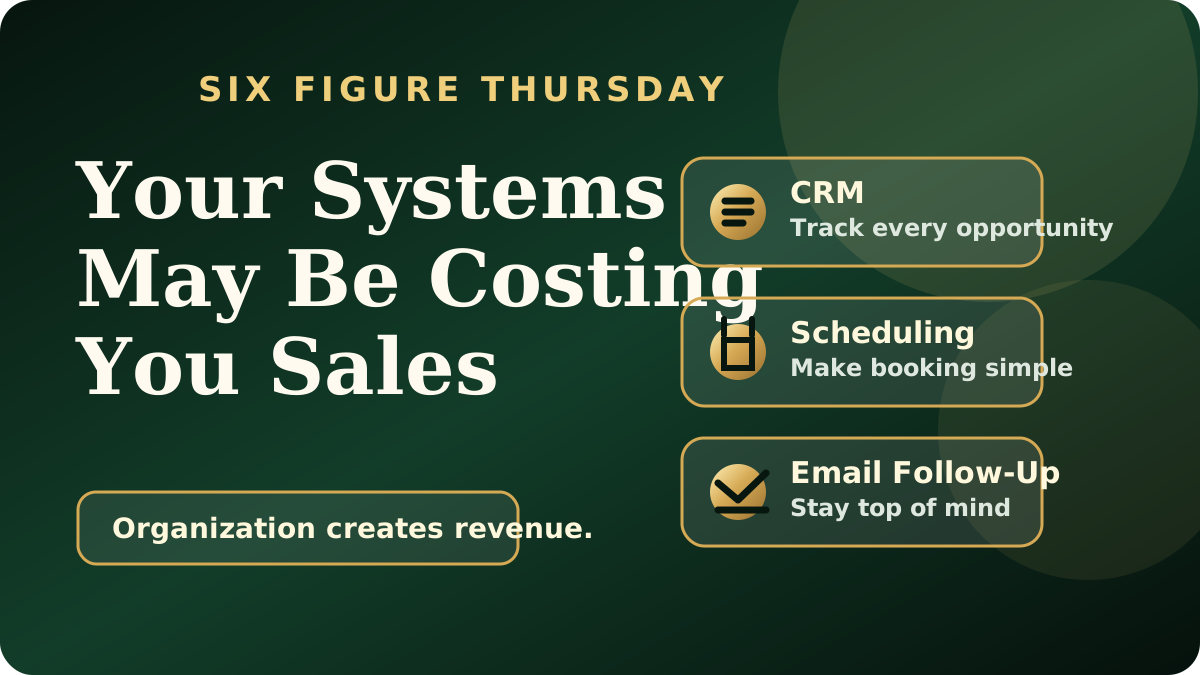
Organization is not just administrative. Organization is revenue-producing.
The Power of Systems
A system is simply a repeatable way of making sure something important gets done.
It helps you remain consistent, even when you are busy. It protects opportunities from falling through the cracks. And it allows you to serve more people without feeling like your business is constantly operating in chaos.
Systems do not replace relationships.
Systems help you manage and strengthen relationships.
Here are three tools that can make an immediate difference in an insurance business.
1. A CRM Keeps Opportunities From Disappearing
A customer relationship management system, or CRM, should become the central hub of your business.
It can help you track:
- New leads
- Current clients
- Previous conversations
- Follow-up dates
- Upcoming birthdays
- Medicare eligibility dates
- Products a client currently owns
- Additional coverage they may need
- Referral sources
- Notes from previous appointments
Without a CRM, valuable information often ends up scattered across notebooks, text messages, email inboxes, spreadsheets, and sticky notes.
That makes it much harder to follow up consistently.
Your CRM should help you answer questions like:
- Who needs to hear from me today?
- Which prospects have not made a decision?
- Which clients may need an additional product?
- Who should receive an annual review?
A CRM is not merely a place to store names.
Used correctly, it becomes an income-building tool.
2. An Online Scheduling System Makes It Easier to Do Business With You
How many potential appointments are lost because of endless back-and-forth communication?
"Are you available Tuesday?"
"What about Wednesday?"
"Does 2:00 work?"
"I'm sorry, I can't do that time anymore."
A scheduling system such as Calendly allows prospective and current clients to choose an available appointment time without waiting for you to respond.
It can also help you:
- Separate appointment types
- Collect important information before the meeting
- Send automatic confirmations
- Send appointment reminders
- Reduce missed appointments
- Create a more professional client experience
Convenience matters.
When it is easy for someone to schedule with you, they are more likely to take the next step.
3. Email Marketing Keeps You Top of Mind
Not every person on your list needs insurance today.
But they may need you next month.
They may have a family member turning 65.
They may lose their employer coverage.
They may start a business.
They may get married, have a baby, purchase a home, or begin thinking more seriously about life insurance.
The question is:
Will they remember to call you when that moment arrives?
Consistent email communication helps you stay connected without manually contacting every person individually.
Your emails can:
- Educate clients
- Answer common questions
- Share enrollment reminders
- Explain coverage options
- Encourage annual reviews
- Request referrals
- Introduce additional services
- Keep your name in front of your community
You do not have to sell something in every email.
Sometimes the most powerful thing you can do is simply remain helpful, relevant, and visible.
When the need arises, you want your name to be the first one they remember.
The Real Goal Is Not More Technology
You do not need every tool on the market.
You need a few systems that work together and support the way you operate your business.
A lead enters your CRM.
The prospect receives a follow-up.
They use your scheduling link to book an appointment.
They receive an automatic confirmation and reminder.
After the appointment, they remain connected through your email campaigns.
That is how systems begin working together.
And when your systems work together, you spend less time chasing information and more time:
- Serving clients
- Having meaningful conversations
- Following up with qualified prospects
- Building referral relationships
- Generating revenue
You do not build a six-figure insurance business by doing everything manually forever. At some point, you must create systems that help your business continue moving, even when you are not personally touching every single step.
Your 6-Figure Challenge
Choose one area of your business that currently feels disorganized:
Lead tracking. Follow-up. Appointment scheduling. Client communication. Annual reviews. Referral tracking.
Then answer these three questions:
- What is currently falling through the cracks?
- What tool or system could help me manage it?
- What is one step I can take this week to improve it?
Do not attempt to rebuild your entire business in one day.
Choose one system.
Strengthen it.
Then build from there.
A more organized business creates room for more revenue.